


$55M in external funding
Research
Our Focus
Our faculty and students conduct research on population-level disease prevention, health promotion, health policy, and more. We have a tradition of excellence in research and the application of that knowledge through public health practice and service. Our experienced faculty share their research with community leaders, policymakers, and fellow researchers to better inform the public, respond to emergencies, and provide counsel on emerging health issues facing communities.
Our research- and practice-focused centers specialize in a wide range of important public health topics—including diabetes epidemiology, cancer prevention, and statistical consulting—and are nationally, if not internationally, recognized for
their work. Our Center for Global Health is the only World Health Organization Collaborating Center for Promoting Family and Child Health in the Americas. We’re also home to nationally-funded research centers including the Colorado Integrated
Food Safety Center of Excellence, one of six centers of its kind funded by the Centers for Disease Control & Prevention (CDC); Rocky Mountain Public Health Training Center, one of 10 centers funded by the Health Resources and Services Administration
Agency; and the Center for Health, Work & Environment (one of 10 centers of its kind funded by the CDC).
Contact Information
If you need specific guidance on your research, contact your department chair or Associate Dean for Research, Dana Dabelea:
- Department of Biostatistics & Informatics: David Conti
- Department of Community & Behavioral Health: Jenn Leiferman
- Department of Environmental & Occupational Health: Beth Carlton
- Department of Epidemiology: Jill Norris
- Department of Health Systems, Management & Policy: Glen Mays
Our Team
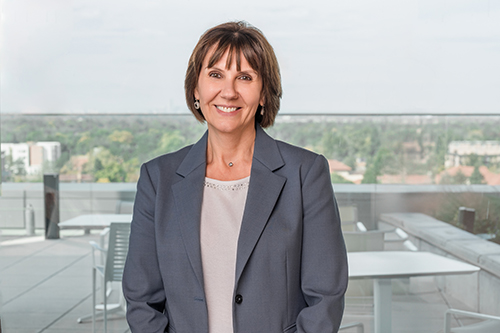
Dana Dabelea MD, PhD
Associate Dean of Research, Conrad M. Riley Distinguished Professor, Director (LEAD Center)


Collaborative Research Spotlight
Delineating a Spectrum of Physician Participation in Medical Aid in Dying: A Qualitative Exploration
Karen Albright, Denae Gerasta, Todd D Becker, Vinay Kini, Daniel D Matlock, Stacy M Fischer, Eric G Campbell _____________
Public Health Impact Statement: This publication lays out a new, empirically based conceptual model of the various ways in which physicians do and don’t participate in Medical Aid in Dying (MAID). This contrasts with older models that viewed participation in MAID only in the context of serving as a MAID attending or consultant. In this paper, we show that participating or not participating in a number of MAID activities is best represented as a spectrum of discrete activities ranging from discussing MAID, referring patients to a MAID provider, serving as the MAID consultant, and finally as the MAID attending. We hope this model can be used to guide future research on MAID.
State Cannabis Policy and Public Health Research in the United States: Policy Disconnects and Research Gaps
Gregory J. Tung, Louis Leslie, Natalie Murphy, Jonathan M. Samet, Tianjing Li, and Cathy J. Bradley
_____________
Public Health Impact Statement: Cannabis policies have evolved rapidly across the United States, yet the scientific evidence needed to inform these policies has not kept pace. Our review highlights the importance of moving beyond simply distinguishing between states with and without legal cannabis markets and instead examining the specific policies and regulations states are adopting and their implications for public health. By identifying gaps between state cannabis policymaking and the research being conducted, our work highlights opportunities to better align research priorities with policymakers' needs and ultimately develop more effective policies that protect and promote public health.
Anthropogenic and Geogenic Factors Affecting Groundwater Arsenic and Potential Drinking Water Exposure in the San Luis Valley, Colorado
Ryan G. Smith; Alandra M. Lopez; Alexandder S. Honeyman; Dawson Carney; Scott Fendorf; Melissa A. Lombard; Matthew O. Gribble; Abdullah Al Fatta; Katherine A. James
_____________
Public Health Impact Statement: This publication is an important manuscript that demonstrates how transdisciplinary teams are essential for addressing the complexity of climate stressors and environmental health and developing solutions to support communities to adapt. Using machine learning and community-derived groundwater data, this study integrates well depth, geological characteristics, and other environmental factors to predict areas where arsenic concentrations may exceed 5 µg/L, a level of concern for potential health impacts. Because nearly 20% of sampled private wells in the San Luis Valley had arsenic concentrations at or above this level, the findings provide a valuable tool for prioritizing water testing, targeting public health interventions, and directing limited resources toward households most likely to be exposed. The model’s ability to estimate arsenic concentrations at different depths also offers a novel approach to understanding how changes in groundwater use and well construction may influence exposure over time. Ultimately, this research supports more proactive, geographically targeted strategies to prevent arsenic exposure and reduce the risk of associated chronic health conditions, including cardiovascular disease, diabetes, and cancer, particularly in rural and underserved communities that rely on private wells and may lack routine drinking water monitoring
Out-of-Pocket Costs for Chronic Illness Management in High-Deductible Health Plans
Risha Gidwani, Zachary Wagner, Steven M Asch, Veronica Yank, Lane Burgette
_____________
Public Health Impact Statement: High-deductible health plans (HDHPs) are a common form of health insurance, enrolling more than 40% of privately-insured Americans. Approximately 50% of adults ages 40–64 have a chronic illness, meaning they require regular access to medical care to prevent disease complications. In our national study of more than 500,000 adults, we examined how much patients enrolled in HDHPs paid out-of-pocket to receive a minimum level of guideline-recommended care for diabetes and/or hypertension.
We found that patients in HDHPs paid 1.6–2.4 times more out-of-pocket to receive this care than patients in traditional insurance plans—although the absolute difference was relatively small, around $60–$90 annually. Coupled with our previous research showing that HDHPs reduce receipt of recommended chronic disease care, these findings suggest that even relatively modest increases in out-of-pocket costs may create meaningful barriers to necessary medical care.
This research raises an important policy question: should care that can help prevent disease complications be subject to 100% cost sharing?
Immune Regulation by CD55 in Chronic Beryllium Disease
Li Li, Sucai Liu, Zhe Lei, Joshua Macaluso, Shujin Guo, Kristyn MacPhail, Margaret M Mroz, Clara I Restrepo, Ivana Y Yang, Lisa A Maier
_____________
Public Health Impact Statement: Beryllium exposure, primarily in the workplace, results in an abnormal beryllium immune response, detected on a blood test used to screen workers for beryllium sensitization, a precursor to the scarring lung disease, chronic beryllium disease; unfortunately, the blood test does not distinguish sensitization from disease, and additional testing, including a lung biopsy, is needed to determine if someone has chronic beryllium disease. Our study identified that different levels of proteins that impact the immune system were found in chronic beryllium disease cells compared to those with beryllium sensitization (CD55 and CD97), and in serum (sCD55). Furthermore, when CD55 was altered in cell models, there were changes in the immune response to beryllium, supporting that CD55 is a regulator of beryllium-induced immune activation. Thus, these proteins may be tested as biomarkers to discriminate chronic beryllium disease from sensitization, and alteration of this pathway may serve as potential therapeutic targets, which would ultimately reduce the burden of occupational lung disease.
Faculty Highlight of the Month

Jenn Leiferman, PhD
Dr. Jenn Leiferman has spent the last 20 years working in the area of mental health. Her research focuses on developing and testing prevention and treatment strategies for perinatal and child mental health. Recently, her work has also focused on improving access to care for perinatal mood disorders. She is also the director of the Rocky Mountain Prevention Research Center and the founding director of the Population Mental Health & Wellbeing Program at ColoradoSPH.
| Check Out Dr. Leiferman's Recent Publication:
“Birth Trauma: The Role of Obstetric Complications and Perceptions of Care Across the Perinatal Period"
Quick Facts
800+ publications
Ranked 17th in NIH funding for SPHs
Featured Projects
Principal Investigator: Dana Dabelea, MD, PhD
Researchers Involved: Dana Dabelea, Anne Starling, Brianna Moore
About the Study: Similar to the Healthy Start study, this study is apart of the Environmental Influences on Child Health Outcomes (ECHO) Study. Mile-High ECHO is a new cohort recruiting pregnant individuals and their partners, to study how exposures before and after birth affect child health outcomes. This research can be used to promote policy and practice that is aimed at reducing adverse environmental exposures. Our site works with Denver Health and the University of Colorado Hospital to enroll a diverse group of participants. As part of the nationwide ECHO consortium, we will explore how early-life exposures impact the risk of obesity and neurodevelopment. Our goal is to identify ways to improve child health from preconception through early life.
Learn more at https://echochildren.org/ and https://www.milehighecho.org/.
Principal Investigator: Lee Newman, MD, MA
Researchers Involved: Lee Newman, Lyndsay Krisher
About the Study: Women who live in agricultural communities in Latin America are exposed to extreme heat, humidity, and air pollutants, especially if they are employed in agriculture. The goal of this 5-year NIH-supported study is to examine the environmental determinants of kidney injury among Guatemalan women working in sugarcane and banana plantations.
Definition, Etiology, Function: INtegration to Enhance Type 2 Diabetes treatment (DEFINE-T2D) Consortium
Principal Investigator: Katerina Kechris, PhD
Researchers Involved: Katerina Kechris, Wei Perng, Leslie Lange, Ivana Yang
About the Study: In 2024, the National Institute of Diabetes and Digestive and Kidney Diseases (NIDDK) funded the DEFINE-T2D consortium to better understand heterogeneity in T2D. Leveraging data on clinical, genetics, omics, environmental exposures, lifestyle behaviors, and social factors, major goals of DEFINE-T2D are to: 1) develop a broadly applicable framework for identifying subtypes of T2D; and 2) increase understanding of the physiologic drivers of T2D subtypes to guide development of more effective precision interventions DEFINE-T2D is composed of four study sites (12 PIs/MPIs) bringing data from 13 cohorts, four randomized controlled trials, and six electronic health records/biobanks, contributing N>4.8 million individuals – primarily adults – with prediabetes or T2D. Data analysis coordination and operations are overseen by the Biostatistics Research Center (BRC).
Resources

Colorado School of Public Health
CU Anschutz
Fitzsimons Building
13001 East 17th Place
3rd Floor
Mail Stop B119
Aurora, CO 80045
CMS Login