


Directory
Our online
directory* can help you sort through our staff and faculty records and contact the
individual that you need to reach. Dropdown menus are available so that you can search by center, department, or university location. Click on a name to view biography and contact information.
*If you are a ColoradoSPH faculty or staff member and have edits to your directory listing, please submit them via the ColoradoSPH Directory Update Request Form.
To filter your search, please only use one dropdown menu and one filter at a time.
Center
Department
Campus
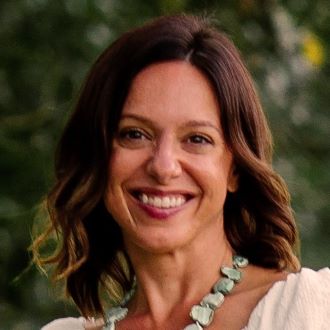
Chelsea Wesner DrPH, MPH, MSW
Research Scientist, Assistant Research Professor
- Centers for American Indian & Alaska Native Health Department of Community & Behavioral Health
Dr. Chelsea Wesner (she/her) is an Assistant Research Professor within the Centers for American Indian and Alaska Native Health (CAIANH) and Department of Community and Behavioral Health. She is honored to have partnered with Tribal communities for nearly 20 years through public health research and practice in her current role at CAIANH, and in past roles at the University of South Dakota, University of Oklahoma, and Centers for Disease Control and Prevention. In her current role, Dr. Wesner leads research that applies Indigenous research methodologies to understand, measure, and promote early relational wellbeing and family economic wellbeing. She also co-leads research-practice partnerships that aim to build evidence and understanding about home visiting and wellbeing in Indigenous communities. This culturally grounded, intergenerational research holds great promise for informing future practice, research, and policy. Dr. Wesner is an Ascend Fellow at the Aspen Institute and serves as an advisor on multiple national early childhood, maternal and child health, and family economic wellbeing efforts. She lives in South Dakota. Her roots are in Oklahoma, and she's a citizen of the Choctaw Nation of Oklahoma.
Areas of Expertise
- American Indian and Alaska Native Health
- Early Relational Wellbeing
- Family Economic Wellbeing
- Indigenous Methodologies
- Measurement
Education, Licensure & Certifications
- DrPH, Community and Behavioral Health, University of Colorado Anschutz, 2025
- Graduate Certificate in American Indian Health, Johns Hopkins Bloomberg School of Public Health, 2020
- MPH, Health Promotion Sciences, University of Oklahoma College of Public Health, 2010
- MSW, Administrative and Community Practice, School of Social Work, University of Oklahoma, 2010
- BA, Sociology and Minor in American Indian Studies, University of North Carolina at Chapel Hill, 2006
Resumes/CV:
Awards
- Excellence in Teaching Award, Johns Hopkins Bloomberg School of Public Health Center for Indigenous Health, 2025.
- Ascend Fellow, Aspen Institute, 2024.
- Native Children’s Research Exchange (NCRE) Scholar, University of Colorado Anschutz Medical Campus, 2023.
- Native Research Ambassadors Program, Center for American Indian Community Health, University of Kansas Medical Center, 2019.
- Early Career Teaching Excellence Award, School of Health Sciences, University of South Dakota, 2019.
Affiliations
- Ascend Fellow, Aspen Institute; Scholar, Native Children's Research Scholars Program
- Member, Tribal Head Start Community Workgroup, American Indian and Alaska Native Family and Child Experiences (AIAN FACES) Study, ACF Office of Planning, Research and Evaluation
- Workgroup Member, Next Steps for Tribal TANF Research and Data project, ACF Office of Planning, Research and Evaluation
- State Maternal Child Health Block Grant Reviewer, Region VIII Health Resources & Services Administration
- Ad hoc reviewer, American Indian and Alaska Native Mental Health Research
- Ad hoc reviewer, Child Abuse & Neglect