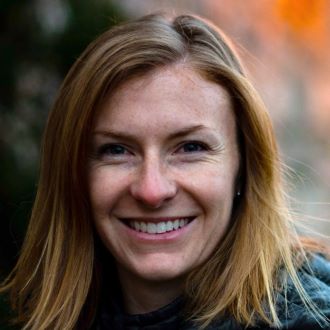
Dr. Savannah D'Evelyn is an Assistant Professor in the Department of Environmental and Occupational Health at the Colorado School of Public Health. She is an environmental health and a bio-social scientist with expertise in community engagement, climate adaptation, air quality monitoring, wildfire smoke readiness, and risk communication. Dr. D'Evelyn utilizes interdisciplinary research methods including community based participatory research (CBPR), and Youth Participatory Action Research (YPAR) to understand how to prepare communities for the impacts of climate change. Dr. D'Evelyn is working with schools and communities across the state to implement youth-led air quality monitoring networks, and develop a definition of smoke-readiness. Dr. D'Evelyn strives to increase the reach and impact of her research by working in multi-disciplinary teams. She also facilitates single and multiday workshops, panels, and focus groups that bring disparate groups together around a shared challenge or research question.
Areas of Expertise
- Air Pollution
- Wildfire Smoke
- CBPR
- Risk Communication
- Toxicology
Education, Licensure & Certifications
- PhD, Molecular, Cellular and Integrative Physiology, University of California, Davis, 2020
- BS, Biology, Wofford College, 2015
- BA, Spanish, Wofford College, 2015
Courses
- EHOH 6619 Environmental Exposures and Health Effects
Research
- NIH: NIEHS, Living and Learning with Wildfires. May 2023-April 2028. Role: PI
- EarthLab, A Collaborative Approach Preparing and Protecting At-Risk Communities from the Impacts of Climate Change in North-Central Washington. April 2023-September 2024. Role:Co-PI
- Pacific Northwest Ag Safety and Health Center, Stressors of balancing childcare, work, and concerns about ambient exposures on personal well-being and work presenteeism for farmworker parents during and after the COVID-19 pandemic. September 2021-September 2022. Role: PI
Publications and Presentations
- D’Evelyn SM, Nerenberg I, Blancas M, Rivera L, Suarez A, Drury DO, Kasner EJ, 2024 Stressors of balancing childcare, work, and concerns about ambient exposures on personal well-being and work presenteeism for farmworker parents during wildfire season. BMC Public Health. doi: 10.1186/s12889-024-20671-x
- D’Evelyn SM, Wood LM, Desautel C, Errett NA, Ray K, Spector JT, Alvarado E, 2023. Learning to Live with Smoke: Characterizing Wildland Fire and Prescribed Fire Smoke Risk Communication in Rural Washington. Environmental Research: Health. doi: 10.1088/2752-5309/acdbe3
- D’Evelyn SM, Blancas M, Pollowitz M, Haugo RD, Masuda YJ, Prichard SJ, Ray K, Walker EG, Spector JT, 2023. Mobilizing through dialogue: building interdisciplinary partnerships among forest health, wildland fire, and public health sectors to find solutions to address the impact of wildland fire smoke on communities. Environmental Research Communications. doi: 10.1088/2515-7620/acc014
- D’Evelyn SM, Jung J, Alvarado E, Baumgartner J, Caligiuri P, Hagmann RK, Henderson SB, Hessburg PF, Hopkins S, Kasner EJ, Krawchuk MA, Krenz JE, Lydersen JM, Marlier ME, Masuda YJ, Metlen K, Mittelstaedt GD, Prichard SJ, Schollaert CL, Smith EB, Stevens JT, Tessum CW, Reeb-Whitaker C, Wilkins JL, Wolff NH, Wood LM, Haugo RD, Spector JT, 2022. Wildfire, smoke exposure, human health, and environmental justice need to be integrated into forest restoration and management. Current Environmental Health Reports. doi: 10.1007/s40572-022-00355-7