


Modeling Results
Coronavirus (COVID-19)
The Colorado team's modeling documentation can be viewed at Colorado COVID-19 Mathematical Model Documentation (the SEIR model) and Regional Model Documentation. All available modeling is linked below, and additional updated Regional Models and Colorado County Population Data Dashboards are available.
State models
October 6, 2022 Modeling Report
August 25, 2022 Modeling Report
June 23, 2022 Modeling Report
Regional models
November 18, 2021 Regional Models for Colorado
October 26, 2021 Regional Models for Colorado
September 22, 2021 Regional Models for Colorado
Additional reports
January 3, 2022 COVID-19 Vaccine Race & Ethnicity Data Report
October 12, 2020 Stakeholder Modeling Website Feedback Report
July 6, 2020 Colorado COVID-19 Boundaries & Mobility-Identified Communities Report
About the models
When Colorado Gov. Jared Polis and the Colorado Department of Public Health and Environment (CDPHE) needed to respond to the rapidly worsening COVID-19 pandemic, they needed data and projections of the pandemic’s course based upon Colorado data. A team was quickly assembled by the Colorado School of Public Health (ColoradoSPH) to collaborate with CDPHE on epidemic modeling—the basic approach for generating the needed information for decision-making.
These models are mathematical representations that reflect how viruses affect populations: infecting those who are susceptible, making some ill and in need of hospital and critical care, and leading to death for some. The models are used to examine how different measures, like closing restaurants and bars, slow and diminish the epidemic. Remembering that a model is a simulation of the world, none “are correct” but they should be useful and allow people to make hypotheses about the trajectory of a disease and the impacts of different policies and behavior changes.
About the team
In response to the CDPHE request, Dean Samet put together an interdisciplinary and interinstitutional team that brought complementary expertise for epidemiological modeling including other experts from our school, the University of
Colorado School of Medicine, the University of Colorado Boulder, the University of Colorado Denver, and Colorado State University.
Coordination, management, and communications

Modeling team
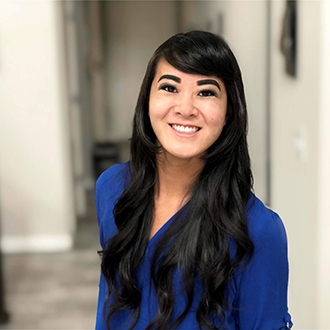
Health data and analytics
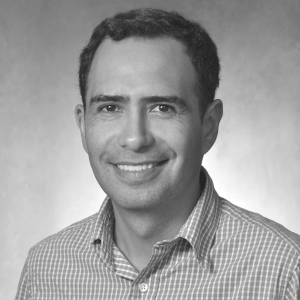
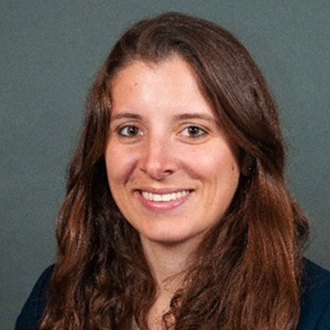
Alumni
- Jimi Adams, PhD
- Sabina Altus, PhD
- Andrea Buchwald, PhD
- Kathryn Colborn, PhD, MSPH
- Alex Fout, PhD
- David Jacobson, BS
- Richard Lindrooth PhD
- Glen Mays PhD, MPH
- Laura Timm PhD