


Canvas access has been restored for our users, but the service reliability remains uncertain. Due to recent events, Canvas has had intermittent outages which are at the discretion of the vendor and may occur during a final exam. Faculty and staff may continue to use Canvas, but we strongly advise faculty and students to prepare a contingency plan for turning in assignments and final exams in the event Canvas access becomes unavailable again.
Instructure, the company that owns Canvas, has provided an FAQ about the incident, which may not answer all your questions. We will share more information if it becomes available.
You can complete this program entirely online, take your classes at the University of Colorado Anschutz Medical Campus, or do a mix of both. In this program, you'll learn how to promote the health of communities threatened by natural hazards, incidents of mass violence, civil conflict, infectious disease outbreaks, and other emergent public health threats. This interdisciplinary certificate focuses on training the leaders of tomorrow to help domestic and international communities prepare for, respond to, and recover from disasters. In addition, you'll get hands-on experience through table-top and field simulation exercises.
Gain practical experience
Put evidence into practice with action-oriented table-top and field simulation exercises.
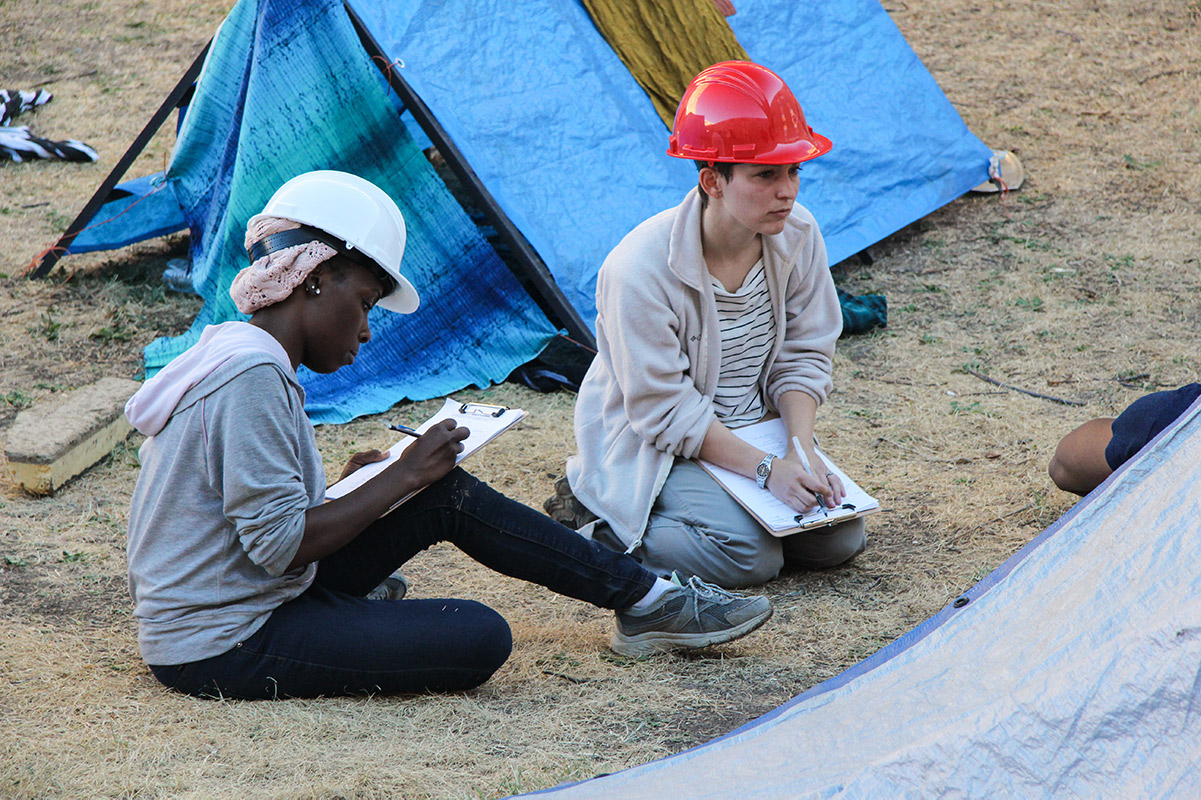
Advance your career
Fill an identified gap in public health disaster and humanitarian response training.
Learn disaster prep skills
Learn how to help communities prepare for, respond to, and recover from disasters.
Curriculum
Course requirement
Course ID
Credits
Introduction to Public Health in Disasters
EHOH 6622
3
Global Response to Disasters and Climate Crises
EHOH 6625
3
Disasters and Climate Crises: Practical Applications
EHOH 6626
3
Climate and Disaster Mental Health
EHOH 6642
3
Electives
3
15
Curriculum meets U.S. and global standards, including national health security capabilities and humanitarian competencies.
Approved electives (minimum of 3 credits from the following):
Course
Course ID
Credits
CU Anschutz electives
Public Health in the Global Community
CBHS 6619
3
Community Health Assessment
CBHS 6624
3
Health and Human Rights
CBHS 6629
3
Risk Assessment and Decision Making
EHOH 6620
3
GIS for Public Health Research and Practice
EHOH 6621
3
Geographic Perspective on Global Health
EHOH 6623
1
Infectious Disease Environmental Context
EHOH 6624
3
International Travel and Health
EHOH 6633
1
Climate Change and Health
EHOH 6635
3
Communication Skills for Public Health Impact
EHOH 6638
3
Public Health Surveillance
EPID 6624
2
Global Health and Disasters
EPID 6628
2
Applied Global Health Epidemiology
EPID 6634
2
Infectious Disease Epidemiology
EPID 6635
2
Investigation of Disease Outbreaks
EPID 6640
2
Ethical and Legal Issues in Public Health
HSMP 6608
2
Current Global Health Policy Issues
HSMP 6615
2
Comparative Health Systems
HSMP 6618
2
CSU electives
The Culture of Disaster
ANTP 5320
3
Food, Hunger and Culture
ANTP 5380
3
Food Systems, Nutrition and Food Security
FSHN 5000
2
Applications of International Development
IEOO 6790
3
Comprehension of an all-hazards approach to disasters, including climate-related events, natural hazards, disease outbreaks, acts of violence, technological disasters, complex and cascading crises
Demonstration of knowledge of why and how climate variability and change create hazards and disasters
Analysis of public health implications of disasters, including how outcomes differ by event type
Comprehension of public health informed climate and disaster cycle frameworks for mitigation, preparation, response and recovery
Application of public health approaches to climate and disaster events, including hazards and risk analysis, mitigation and preparedness, incident management and response coordination
Synthesis of knowledge of social determinants of climate and disaster vulnerability, including factors that influence exposure risk, response and recovery
Application of best practice public health climate and disaster interventions, focused on increasing adaptive capacity, fostering resilience, incorporating social justice or promoting equity
Comprehension of practice-oriented frameworks, including core capabilities associated with climate change adaptation and resilience, and national and global public health emergency preparedness and response
Total credits: 15
MPH students also completing a concurrent specialty certificate will need to meet the requirements of both the MPH and the certificate with only nine overlapping credits and have a minimum of 48 total credits to graduate with both.